
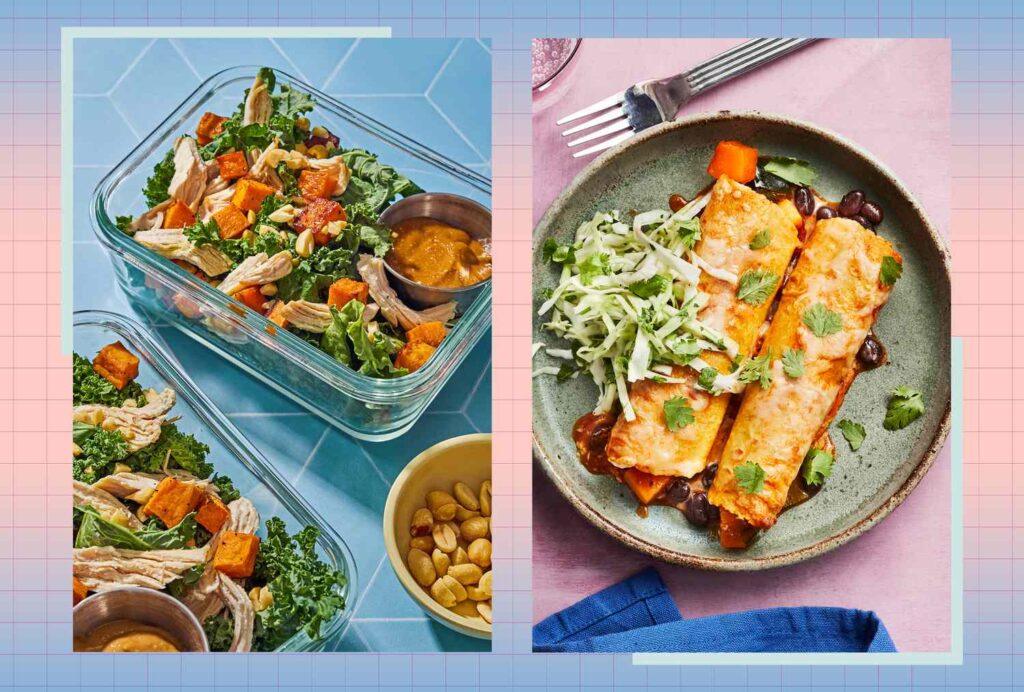
| DAYS | 1 | 2 | 3 | 4 | 5 | 6 | 7 |
| MEALS | Breakfast: Almond-Matcha Bowl + eggs ——– Lunch: Tuna Lettuce Wraps ——– Dinner: Squash-Black Bean Enchiladas |
Breakfast: Mango-Chia Pudding ——– Lunch: Chicken–Kale–Sweet Potato Salad ——– Dinner: Jerk Shrimp + Brown Rice |
Breakfast: Mango-Chia Pudding ——– Lunch: Chicken–Kale–Sweet Potato Salad ——– Dinner: Lemon-Pepper Chicken & Veg |
Breakfast: Mango-Chia Pudding ——– Lunch: Chicken–Kale–Sweet Potato Salad ——– Dinner: Salmon w/ Orzo & Pea Pesto |
Breakfast: Mango-Chia Pudding ——– Lunch: Chicken–Kale–Sweet Potato Salad ——– Dinner: Spiced Lentils w/ Roasted Roots |
Breakfast: Raspberry-Spinach Smoothie ——– Lunch: Chickpea Salad Sandwich ——– Dinner: Halibut w/ Brussels & Quinoa |
Breakfast: Rainbow Frittata ——– Lunch: Avocado–White Bean Wrap ——– Dinner: Root Veg Mulligatawny |
| DAILY TOTALS | Calories: 1,821 Fat: 84g Protein: 75g Carb: 197g Fiber: 37g Sodium: 1,410mg | Calories: 1,776 Fat: 73g Protein: 86g Carb: 204g Fiber: 51g Sodium: 1,454mg | Calories: 1,772 Fat: 71g Protein: 97g Carb: 203g Fiber: 53g Sodium: 1,447mg | Calories: 1,833 Fat: 76g Protein: 91g Carb: 205g Fiber: 53g Sodium: 1,526mg | Calories: 1,834 Fat: 83g Protein: 82g Carb: 205g Fiber: 55g Sodium: 1,527mg | Calories: 1,819 Fat: 81g Protein: 68g Carb: 220g Fiber: 61g Sodium: 1,337mg | Calories: 1,790 Fat: 74g Protein: 70g Carb: 234g Fiber: 50g Sodium: 1,518mg |
Day 1
Daily Totals: 1,821 calories, 84g fat, 16g saturated fat, 75g protein, 197g carbohydrate, 37g fiber, 1,410mg sodium
Breakfast (534 calories)
- Serve with 2 large eggs, scrambled
Lunch (412 calories)
- Serve with 1 medium apple
- 1 tablespoon unsalted natural peanut butter
Dinner (428 calories)
Snacks
- Serve with 2 tablespoons walnut halves (204 calories)
- ½ cup nonfat Greek yogurt with 1½ cups cherries (212 calories)
Make it 1,500 calories: Omit eggs at breakfast and peanut butter at lunch.
Make it 2,000 calories: Add ½ avocado to dinner.
Day 2
Daily Totals: 1,776 calories, 73g fat, 16g saturated fat, 86g protein, 204g carbohydrate, 51g fiber, 1,454mg sodium
Breakfast (363 calories)
Lunch (441 calories)
- Serve with 1 cup strawberries
Dinner (528 calories)
- Serve with ½ cup cooked brown rice
Snacks
- Serve with 6 carrot sticks, 6 sugar snap peas, and 2 tablespoons walnut halves (232 calories)
- Serve with 1 medium orange (264 calories)
Make it 1,500 calories: Omit P.M. snack.
Make it 2,000 calories: Add 2 large eggs, scrambled, to breakfast.
Day 3
Daily Totals: 1,772 calories, 71g fat, 17g saturated fat, 97protein, 203g carbohydrate, 53g fiber, 1,447mg sodium
Breakfast (363 calories)
Lunch (477 calories)
Dinner (516 calories)
Snacks
Make it 1,500 calories: Omit A.M. snack.
Make it 2,000 calories: Add 2 large eggs, scrambled, to breakfast.
Day 4
Daily Totals: 1,833 calories, 76g fat, 17g saturated fat, 91g protein, 205g carbohydrate, 53g fiber, 1,526mg sodium
Breakfast (363 calories)
Lunch (441 calories)
Dinner (460 calories)
- Serve with 1 medium orange
Snacks
Make it 1,500 calories: Omit A.M. snack.
Make it 2,000 calories: Add 2 large eggs, scrambled, to breakfast.
Day 5
Daily Totals: 1,834 calories, 83g fat, 18g saturated fat, 82g protein, 205g carbohydrate, 55g fiber, 1,527mg sodium
Breakfast (363 calories)
Lunch (498 calories)
Dinner (323 calories)
Snacks
- 1 serving Almost Chipotle’s Guacamole, 6 carrot sticks, 6 sugar snap peas, and 1 hard-boiled large egg (228 calories)
- ½ cup nonfat Greek yogurt, 1½ cups cherries, and 2 tablespoons walnut halves (294 calories)
Make it 1,500 calories: Omit P.M. snack.
Make it 2,000 calories: Add 2 scrambled eggs to breakfast.
Day 6
Daily Totals: 1,819 calories, 81g fat, 16g saturated fat, 68g protein, 220g carbohydrate, 61g fiber, 1,337mg sodium
Breakfast (322)
Lunch (623 calories)
Dinner (406 calories)
Snacks
Make it 1,500 calories: Omit walnuts at A.M snack and omit P.M. snack.
Make it 2,000 calories: Add 2 large eggs, scrambled, to breakfast.
Day 7
Daily Totals: 1,790 calories, 74g fat, 156g saturated fat, 70g protein, 234g carbohydrate, 50g fiber, 1,518mg sodium
Breakfast (281 calories)
- Serve with 1 medium orange
Lunch (431 calories)
- Serve with 1 cup blueberries
Dinner (578 calories)
- Serve with 1 slice whole-wheat bread
Snacks
- 1 serving Almost Chipotle’s Guacamole, 6 carrot sticks, 6 sugar snap peas, and 1 hard-boiled large egg (228 calories)
- ½ cup nonfat Greek yogurt, 1½ cups cherries, and 2 tablespoons walnut halves (294 calories)
Make it 1,500 calories: Omit P.M. snack.
Make it 2,000 calories: Add 1 slice whole-wheat bread and ½ avocado to breakfast.
Frequently Asked Questions
-
Is it OK to mix and match meals if there is one I do not like?Yes! This meal plan is meant to serve as a framework for an anti-inflammatory diet. It doesn’t need to be followed exactly to reap the benefits. If you’re making a recipe swap, it may be helpful to choose a recipe with similar calories, fiber, protein and sodium levels. For more inspiration, check out these delicious beginner-friendly anti-inflammatory recipes.
-
Can I eat the same breakfast or lunch every day?Definitely, it’s fine to eat the same breakfast or lunch every day. The breakfasts range from 280 to 533 calories, while the lunches span 431 to 622 calories. These ranges are fairly close, though if you’re closely monitoring your calories or other nutrients, like protein, you may want to adjust a snack or two.
-
Why is there not a modification for 1,200 calories?We no longer provide modifications for 1,200-calorie days in our meal plans. The 2020-2025 Dietary Guidelines for Americans suggests that limiting calories to 1,200 per day is too low for most people to meet their nutritional needs, plus it’s unsustainable for long-term health and well-being.
-
How does potassium help to lower blood pressure?Too much sodium causes the body to hold on to excess fluid, which can raise blood pressure. Eating foods higher in potassium can help pull sodium out of the body, which can reduce fluid retention. Many fruits and vegetables are rich in potassium. Other foods with potassium include chicken, dairy and salmon.
Health Benefits of the DASH Diet
High blood pressure is a sneaky disease you might not realize you have, since it doesn’t typically present any noticeable symptoms. However, lifestyle changes like diet, physical activity and regular blood pressure monitoring can help you manage your blood pressure. We based this meal plan on the DASH—or Dietary Approaches to Stop Hypertension—diet, one of the best eating patterns for combating high blood pressure. It focuses on eating lots of whole foods like fresh fruits and vegetables, whole grains, beans and proteins like fish, poultry and low-fat dairy rather than red meat—while limiting sodium intake and ultra-processed foods.
There’s also a link between inflammation and high blood pressure. Chronic inflammation can damage your blood vessels and make them stiffer, which can lead to higher blood pressure. The good news is that an anti-inflammatory diet and the DASH diet have a lot in common, making them easy to follow together. While inflammation may not be the only issue behind high blood pressure, eating antioxidant-rich foods and avoiding inflammatory ones can help boost your overall heart health.
How We Create Meal Plans
Registered dietitians thoughtfully create EatingWell’s meal plans to be easy-to-follow and delicious. Each meal plan meets specific parameters depending on the health condition and/or lifestyle goal it is targeting and is analyzed for accuracy using the nutrition database, ESHA Food Processor. As nutritional needs differ from person to person, we encourage you to use these plans as inspiration and adjust as you see fit.