
Survivors of clergy sex abuse in the Archdiocese of New Orleans had their long-awaited day in court Tuesday, when they were given an opportunity to share the horrific stories of rape and molestation they suffered at the hands of local priests, deacons and nuns many years ago.
In emotional statements on the stand in U.S. Bankruptcy Judge Meredith Grabill’s courtroom, nearly two dozen abuse survivors recounted in often graphic, gut-wrenching detail the physical, psychological and emotional abuse they suffered as children and teens — and the scars they have carried with them in the decades since.
“What the trauma has done to us will not ever end,” said Neil Duhon, who was abused and raped as a 15-year-old by one of the church’s most notorious abusers, the late Lawrence Hecker. “It shaped our lives. It is ridiculous how much it destroyed us.”
The survivor statements came on the second-to-last day of trial in the church bankruptcy case. At issue in the three-week trial, technically known as a confirmation hearing, is whether a proposed settlement in the case has been negotiated in good faith and is fair to the more than 600 creditors who filed credible abuse claims.

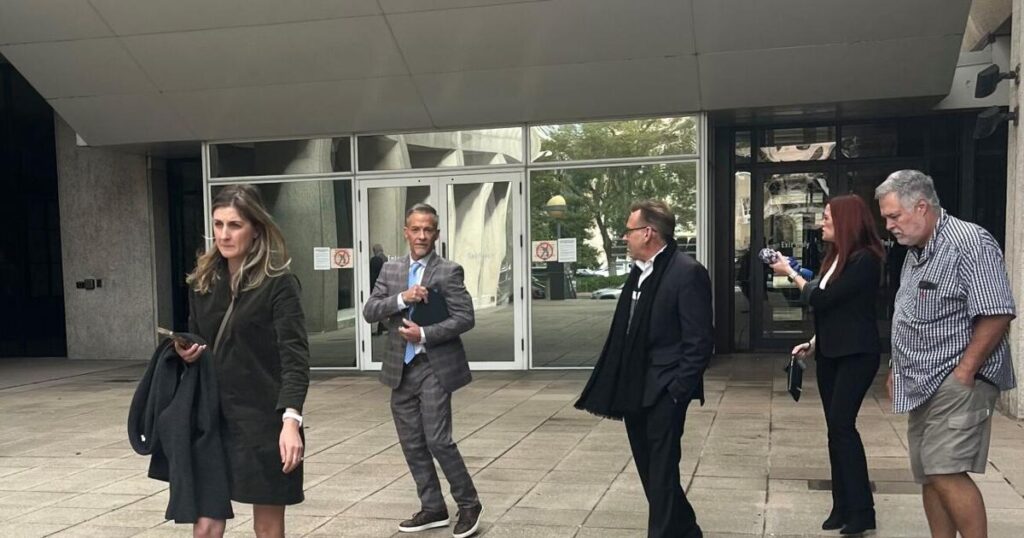
Clergy sex abuse survivor Richard Coon, left, leaves the federal courthouse on Poydras Street with his friend, Blake Bascle, after testifying in the Archdiocese of New Orleans bankruptcy trial on Dec. 2, 2025.
The settlement, which is supported by a supermajority of survivors as well as commercial creditors, would create a $230 million trust to be distributed over several years to abuse survivors. It would also create non-monetary provisions outlining new child protection measures and stricter reporting requirements.
In their statements Tuesday, survivors weighed in on those provisions, with some saying the measures don’t go far enough to hold the church accountable. Others raged at leaders of the local church, including Archbishop Gregory Aymond, who sat at the attorney’s table in the front of the packed courtroom a few feet from the witness stand.
“Greg, you are a liar, a fraud and deceiver,” said Aaron Hebert, who also was raped and abused by Hecker. “You and the bishops going back to Philip Hannan are just as guilty as the pedophile priests. You harbored, abetted and protected these monsters, moving them from parish to parish.”

New Orleans Archbishop Gregory Aymond leaves federal court in New Orleans on Thursday, November 20, 2025. (Staff photo by Brett Duke, The Times-Picayune)
During a break in the testimony, Aymond said he was deeply moved by the survivors’ statements.
“I feel very emotional about it,” Aymond said. “The pain they are going through is immense. No one can take that away from them. I pray for their healing.”
‘Praying for peace, not ready to let go’
The survivor remarks, which began shortly after 9 a.m. and lasted until 5:30 p.m., were designed as much to satisfy legal thresholds necessary for plan confirmation as to provide catharsis and healing to those most directly affected by the abuse crisis. They also served as a reminder of the ugly truths and dark secrets that led to the bankruptcy case in the first place.
In recent weeks, attorneys for the church, abuse survivors, insurers and other creditors have negotiated deals and resolved years-long conflicts that seemingly softened the acrimony in what has been a highly contentious case. The eight hours of grueling statements Tuesday underscored the pain that will continue long after the case is ended.
Before the statements began, Grabill urged the courtroom packed with survivors and their supporters, attorneys, journalists and church officials to “take a deep breath and exhale.” A former social worker, Grabill acknowledged the difficult day that lay ahead for survivors.
“The conversations you and I are going to have strikes at the heart of vulnerability. We are all a little bit on edge,” she said, adding that, “each of you has demonstrated an amazing amount of bravery just by walking through that door.”
Those who chose to make statements held nothing back. Billy Cheramie described being raped and forced to perform oral sex on priests as an elementary school student in 1974.
“Fifty-one years ago, a little boy I knew died,” Cheramie said. “I am that little boy. I died. They killed me.”
Ted Posner recalled how his “favorite priest” and coach at Little Flower of Jesus Elementary School in the 1970s, Rev. Michael Landry, drove him to an empty house and molested him on the sofa.
“I was a happy, 12-year-old boy one day,” Posner said. “The next day I wasn’t.”
Richard Coon spoke of the excruciating physical pain he experienced being sodomized by a priest at St. Philip Neri.
“I kept asking him to stop,’ Coon said. “It hurt so bad. It seemed to go on forever.”
Stephen Soldano recalled years of abuse and molestation by Deacon George Brignac, one of the few local clerics to have faced criminal charges. Brignac died in prison in 2020 awaiting charges on first-degree rape.

George F. Brignac served as a lay lector at St. Mary Magdalen Catholic Church despite being removed from the Catholic ministry in 1988 amid a host of sexual abuse allegations.
“I am still angry,” Soldano said through tears. “Deacon Brignac terrorized me for three years. My only regret in life is not physically harming him. I pray for peace but am not ready to let go of my anger.”
‘A different age’
Some survivors shared stories that alluded to a ring of abuse within the archdiocese, suggesting that the pattern was systemic and premeditated.
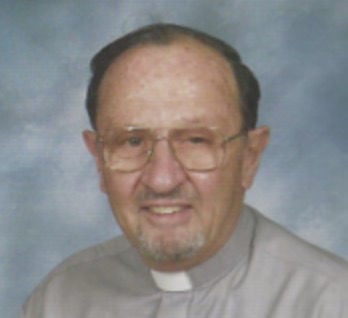
Lawrence Hecker
One Hecker victim described how the priest gifted him with a book that he was told to bring to another priest. Only later did he realize it was a signal that he was a vulnerable child from a troubled family and, therefore, an easy mark for abuse.
Survivor Mark Vath also described being marked for abuse.
“I was given a cross in 1980 during my confirmation by Paul Calamari,” he said. “I now realize it was a signal to other priests.”
Several victims faulted the church hierarchy and Aymond, in particular, for what they say was a decades-long coverup of unspeakable crimes against children.

Archbishop Gregory Aymond works in his office, located inside his residence located inside the Archdiocese of New Orleans.
“Aymond bears accountability,” said Tim Gioe, who was abused by Pat Wattingly in the early 1980s. “The church prioritized protecting priests over safeguarding children. It did not take allegations seriously, instead transferring abusers from parish to parish and placed vulnerable children in harm’s way.”
“The church is worse than the mafia,” Hebert said.
Following the hearing, Aymond said the church could have done things differently but that “we didn’t have the protocols that we have now. … We’re living in a different age now. That’s not meant as an excuse, but we have different protocols today that we did then.”
‘What has happened is evil’
Several times during the testimony, Grabill asked the survivor on the stand what they think of the so-called nonmonetary provisions of the plan, which will implement new stricter child protection measures and reporting protocols as well as create a public database of past abuse incidents.
It’s a theme she has repeatedly returned to during the confirmation hearing and has said she wants to ensure that the new measure, if the plan is confirmed, is enforced.
Duhon said he doesn’t think the provisions “have enough bite” to deter abusers from preying on children.
Richard Coon agreed.
“The Catholic Church in New Orleans is so powerful, the fact they have to be court ordered to report when a child is abused and raped, I find it disgusting,” he said.
Following the testimony, Grabill thanked the survivors for having the “courage, strength and bravery to walk through these doors,” and open themselves to old wounds.
“I value the testimony,” she said. “I need to meditate over it and we will meet back here to talk about confirmation.”

New Orleans Archdiocese Administration offices on Walmsley Avenue
Outside the courtroom, Aymond said what he had heard was “heart wrenching and horrific and told me very clearly of the pain that people went through and my heart really does go out to them.”
He added, “what has happened is evil. There is no way we can do anything other than say I’m sorry, but it is really evil.”