
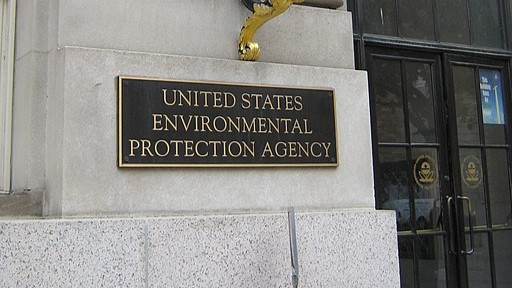
The Arizona Chamber of Commerce & Industry and the Arizona Manufacturers Council have formally submitted comments supporting a proposed determination by the U.S. Environmental Protection Agency that would recognize the role of international emissions in the Phoenix-Mesa region’s ongoing ozone challenges.
In comments filed December 19, the Chamber urged EPA to finalize its proposed finding that the region would have met the federal 2015 ozone standard but for emissions originating outside the United States, a determination authorized under Section 179B(b) of the Clean Air Act.
For more than three decades, Arizona businesses and local governments have worked collaboratively to comply with increasingly stringent ozone standards. Since 1990, the Greater Phoenix area has repeatedly achieved attainment for prior ozone standards through aggressive planning, technology upgrades, and regulatory compliance.
That effort has delivered real results. Despite rapid population growth, increased vehicle miles traveled, and dramatic economic expansion, overall air pollution emissions in Arizona have declined by roughly 70% since 1990.
However, the Chamber notes that since about 2016, additional local controls have produced diminishing returns. Significant reductions in local emissions have not resulted in corresponding improvements in measured ozone concentrations, which is a signal that local sources are no longer the primary driver of the problem.
Citing extensive modeling conducted by the Maricopa Association of Governments and reviewed by EPA, the Chamber emphasized that approximately 80% of ozone affecting the Phoenix region originates from outside Arizona, including emissions transported from other states, Mexico, Asia, and uncontrollable natural events such as wildfires.
The modeling shows that even eliminating roughly 65% of local emissions — an infeasible and economically damaging scenario — would still fail to bring the region into compliance with the 2015 ozone standard. In practical terms, shutting down every industrial source and removing every vehicle would still not achieve attainment.
“The purpose of the Clean Air Act is to improve air quality, not to impose costly controls that deliver no meaningful public health benefit,” the Chamber wrote.
“Reclassification of the region into a more severe nonattainment category would carry serious economic consequences, including project delays and increased regulatory uncertainty,” Arizona Manufacturers Council Executive Director Grace Appelbe said.
Arizona has emerged as a global hub for advanced manufacturing, semiconductor production, artificial intelligence, and data infrastructure. Additional nonattainment penalties could slow or deter investments that are central to Arizona’s long-term economic competitiveness.
“Let’s be clear: approval under Section 179B(b) is not a ‘free pass’ back into attainment,” Appelbe said. “The region would remain designated as moderate nonattainment and continue to meet all applicable Clean Air Act requirements.”
Appelbe said the determination would prevent an automatic downgrade into a more punitive classification when the evidence shows that additional local controls would not solve the problem. Congress explicitly provided this mechanism to ensure environmental policy remains grounded in science and fairness.
The Chamber’s comments argue that EPA’s proposal reflects the “best reading” of the Clean Air Act, consistent with congressional intent and recent Supreme Court guidance requiring agencies to adhere closely to statutory text.
After reviewing the full modeling record, EPA concluded that the evidence supports the finding that international emissions alone account for enough ozone to push the region out of compliance — a conclusion the Chamber says is supported by the weight of the science.
Finalizing the proposal, the Chamber argued, would allow Arizona to focus limited public resources on strategies that actually improve air quality rather than pursuing ever-more-costly controls with no measurable benefit.
Arizona’s comments are part of a broader federal review process that has drawn input from other states facing similar air quality challenges, including Colorado, Nevada, and Utah, according to filings submitted to EPA through the Federal Register.